DLF
Overview
EXECUTIVE SUMMARY
DLF Limited is India's largest publicly listed real estate developer by market capitalisation, founded in 1946 by Chaudhary Raghvendra Singh and headquartered in New Delhi. The company is synonymous with the development of modern Gurugram (formerly Gurgaon) and commands an unmatched brand position in the NCR luxury and super-luxury residential segment. DLF operates across three segments: residential development, commercial office leasing (through DCCDL), and retail. Promoter holding stands at approximately 74%, with the Singh family maintaining operational control through current Chairman Rajiv Singh. DLF's scale, land bank, and financial strength make it a benchmark developer in India, though buyers must carefully navigate the SPV-level contracting structure and a legacy of regulatory matters.
KEY PERFORMANCE METRICS
- Incorporation year: 1946
- Listed on: BSE and NSE
- Headquarters: DLF Centre, New Delhi
- Geography: Pan-India, with dominant presence in Gurugram, NCR; also present in Chennai, Mumbai, Goa, Chandigarh Tri-City, and other cities
- FY2026 consolidated revenue from operations: approximately Rs. 10,174 crore
- FY2026 net profit (before exceptional items): approximately Rs. 4,256 crore
- FY2026 sales bookings: Rs. 20,143 crore
- Gross debt (DLF standalone, as of March 2025): estimated below Rs. 4,000 crore, trending toward zero
- DCCDL gross debt: approximately Rs. 18,000 to Rs. 18,500 crore (commercial leasing entity, separate from residential)
- Net cash surplus generation in FY2026: Rs. 7,746 crore
- Land bank: over 10,000 acres (as per company disclosures)
- Under-construction portfolio: over 37 million sq ft
- Delivered portfolio: over 170 projects across 24 cities
- Employee count: Not publicly available at granular level
- Operating segments: Residential development, commercial leasing (DCCDL), retail (malls)
IMPORTANT CAVEAT
DLF Limited is listed on BSE and NSE and files audited consolidated financials with SEBI. Revenue recognised under Ind-AS (completion-stage recognition) will differ from sales bookings, which are booking-based and not yet revenue. The FY2026 revenue of Rs. 10,174 crore reflects Ind-AS recognised income, while the sales bookings of Rs. 20,143 crore represent contracted demand not yet fully recognised. Buyers contract at the project or SPV level; the legal counterparty is typically a subsidiary such as DLF Home Developers Limited or a project-specific entity, not DLF Limited itself. DCCDL is a separate commercial leasing entity and its debt of approximately Rs. 18,000 crore should be understood distinctly from DLF's residential business.
COMPANY OVERVIEW AND CORPORATE STRUCTURE
Legal entity: DLF Limited CIN: L70101DL1963PLC002484 Registered office: Shopping Mall, Arjun Marg, DLF City Phase I, Gurugram, Haryana
DLF operates through a complex group structure. The residential business is housed largely under DLF Home Developers Limited, a key subsidiary. Individual projects are registered under project-level SPVs. The commercial portfolio is housed under DLF Cyber City Developers Limited (DCCDL), a joint venture with Singapore's GIC (DLF holds 66.67%, GIC holds 33.33%). Buyers should confirm the exact SPV contracting entity for each project before signing agreements.
SISTER COMPANIES AND GROUP ENTITIES
DLF Cyber City Developers Limited (DCCDL): The commercial and retail leasing arm. Operates approximately 38 million sq ft of office space and major retail assets including DLF Malls. Rated CRISIL AA and ICRA AA+. GIC Singapore holds one-third. DCCDL's debt is separate from DLF's residential operations.
DLF Home Developers Limited: Primary residential development subsidiary. Most current NCR residential projects are contracted through this entity or its SPVs.
DLF Assets Private Limited (DAL): Earlier vehicle used for commercial asset holding; now largely merged into DCCDL framework.
DLF Utilities Limited: Manages community services and utilities for certain DLF residential townships.
LEADERSHIP AND MANAGEMENT
Chaudhary Raghvendra Singh founded DLF in 1946. His son-in-law, Kushal Pal Singh (K.P. Singh), joined in the 1960s, built DLF into India's largest developer, and stepped down as Chairman in 2020. K.P. Singh is now Chairman Emeritus. K.P. Singh's son Rajiv Singh, an MIT graduate, is the current Chairman and Managing Director. K.P. Singh's daughter Pia Singh heads DLF's retail business (DLF Emporio, DLF Promenade, DLF Mall of India).
Aakash Ohri serves as Joint Managing Director and Chief Business Officer at DLF Home Developers. Ashok Tyagi previously served as CFO and Group CFO, with current leadership not publicly updated at the time of this report.
PROJECT PORTFOLIO ANALYSIS
A. DELIVERED / OPERATIONAL LANDMARKS
DLF City, Gurugram: A 3,000-plus acre integrated township across multiple phases. Among the earliest and largest planned developments in NCR. Houses residential colonies, commercial zones, malls, and the DLF Golf and Country Club.
DLF Camellias, Gurugram (Sector 42): Super-luxury ultra-high-end residences. Widely regarded as one of India's most premium residential addresses, benchmarking Gurugram's luxury market nationally.
DLF Cyber City, Gurugram: One of India's largest integrated technology parks spanning over 125 acres. Houses GE, Nestle, and dozens of Fortune 500 occupiers. Anchor commercial asset of DCCDL.
DLF Mall of India, Noida; DLF Emporio and DLF Promenade, Delhi: Landmark retail assets under Pia Singh's leadership.
B. KEY ONGOING AND RECENTLY LAUNCHED PROJECTS
DLF Privana South, Sector 76-77, Gurugram: Launched in 2024. Approximately 1,113 units. Sold out within 72 hours at launch. Estimated sales realisation approximately Rs. 7,200 crore. RERA registered with HRERA Gurugram. Luxury high-rise product on Southern Peripheral Road.
DLF Privana West, Sector 76-77, Gurugram: Launched in 2024. Approximately 795 units. Also sold out quickly. Combined Privana South and West sales exceed Rs. 12,790 crore. RERA amendments filed with HRERA Gurugram.
DLF Privana North, Sector 76-77, Gurugram: Third phase of the 116-acre Privana development. HRERA RERA approval secured as of mid-2025. Approximately 1,164 units across six towers on 17 acres. Planned launch in Q1 FY26. Pricing not yet disclosed.
The Dahlias, DLF 5, Gurugram: Ultra-luxury super-high-end project. Contributed significantly to FY2025 pre-sales alongside Privana West.
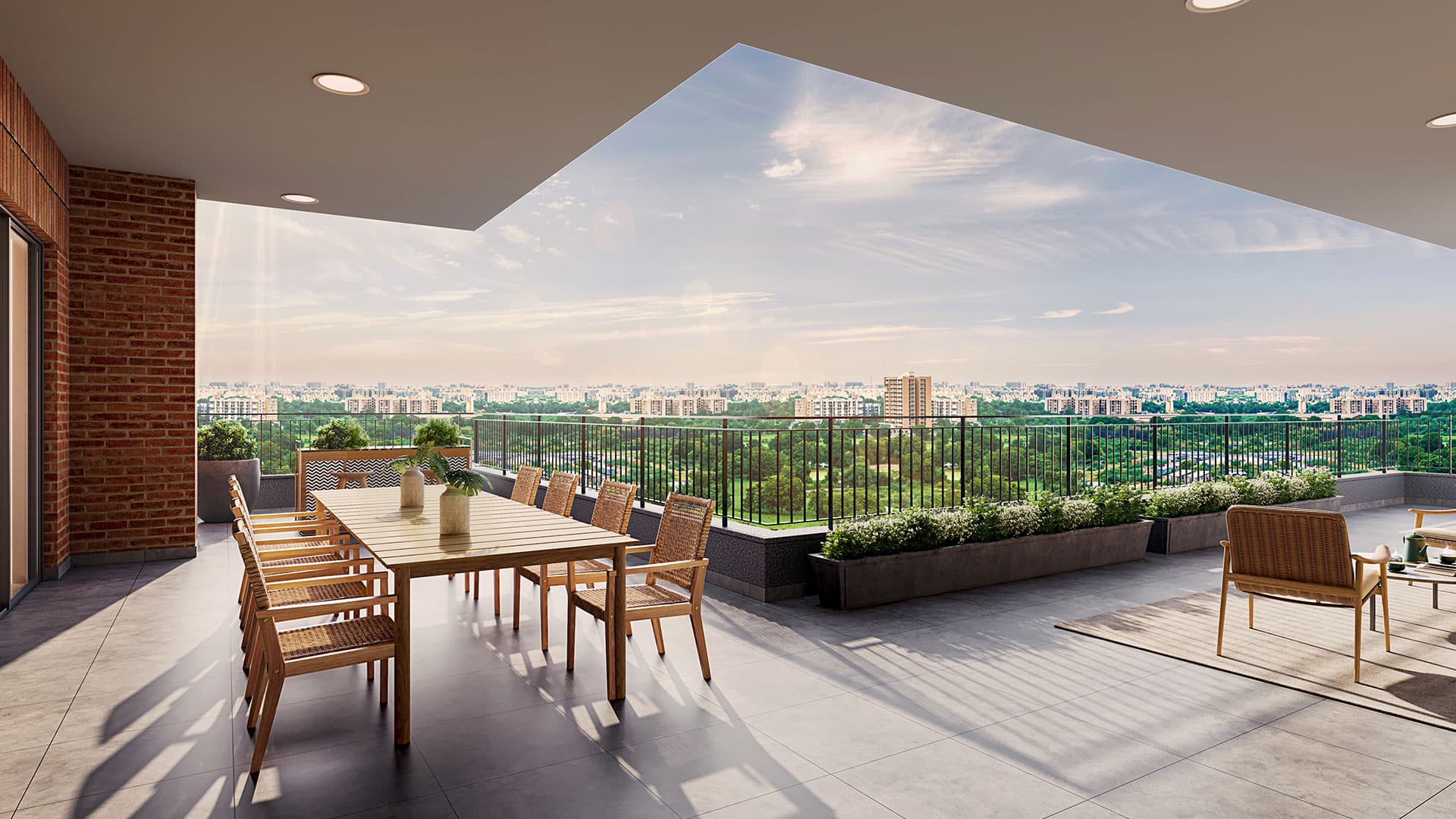
DLF Arbour, Gurugram: Senior living concept project. Estimated revenue potential approximately Rs. 2,000 crore. Launch timeline to be confirmed.
C. PIPELINE
DLF has indicated an upcoming residential launch pipeline with an estimated sales potential of approximately Rs. 73,900 crore in the medium term. New geographies include Mumbai and Goa. Tri-City (Chandigarh region) launches also planned. Commercial expansion under DCCDL targets approximately 20 million sq ft of new office supply, with approximately 9 million sq ft in the near to medium term.
FINANCIAL ANALYSIS
FY2026 consolidated revenue from operations: approximately Rs. 10,174 crore FY2026 EBITDA: approximately Rs. 3,070 crore; gross margin 39% FY2026 net profit (before exceptional items): approximately Rs. 4,256 crore (up approximately 16% year on year) FY2026 net profit (as reported): approximately Rs. 4,415 crore FY2026 sales bookings: Rs. 20,143 crore FY2026 net cash surplus from operations: Rs. 7,746 crore (up 25% year on year) DLF standalone gross debt: approximately Rs. 4,435 crore as of December 2024; expected to fall below Rs. 4,000 crore as of March 2025, trending toward near-zero thereafter. The company achieved a net cash-positive standalone position during the year. DCCDL gross debt: approximately Rs. 18,415 crore as of September 2024. Range-bound within Rs. 18,000 to Rs. 18,500 crore over the medium term. This is commercial entity debt, secured against rent-yielding assets. Cash and liquid investments (DLF): approximately Rs. 7,684 crore as of December 2024 (including Rs. 7,106 crore in RERA-designated accounts) Committed receivables: approximately Rs. 29,146 crore as of December 2024; covers approximately 126% of balance construction cost of Rs. 18,683 crore and total debt outstanding FY2024 CFO: approximately Rs. 25 billion; interest coverage ratio improved to 7.0x in FY2024 from 4.8x in FY2023 Contingent liabilities: Sizeable, primarily related to tax matters, indemnities to DCCDL, and the CCI penalty (Rs. 630 crore deposited with the Supreme Court). Management expects a material reduction through the Vivad se Vishwas settlement scheme. Crystallisation risk remains a watch point. Q4 FY2026 standalone performance reflected a revenue decline of 42% year on year due to lower project recognition; this is a timing and Ind-AS completion recognition matter and does not indicate a business deterioration.
All financials are audited consolidated Ind-AS financials as per exchange filings.
CREDIT RATING AND LIQUIDITY
DLF Limited (residential): CRISIL AA/Stable and ICRA AA/Positive (outlook revised to Positive from Stable). Bank facilities and NCDs rated. DLF Home Developers Limited: ICRA AA/Stable. DCCDL: CRISIL AA/Positive and ICRA AA+/Stable.
These are among the highest ratings assigned to any real estate developer in India. Liquidity is strong. Committed receivables comfortably cover both construction obligations and total debt. The Positive outlook from ICRA on DLF indicates potential for an upgrade subject to sustained performance and further debt reduction. For buyers, investment-grade ratings reduce counterparty risk materially compared to smaller or unrated developers.
MARKET POSITION AND COMPETITIVE ANALYSIS
DLF is the undisputed leader in the Gurugram luxury and super-luxury residential market. The Privana launches and The Dahlias have re-established DLF as the benchmark for premium pricing in NCR. Competitors in NCR luxury include Godrej Properties, Sobha, Birla Estates, and M3M, but none match DLF's land bank depth or brand equity in the DLF 5 and Southern Peripheral Road micromarkets. In commercial office leasing, DCCDL competes with Embassy REIT and Mindspace REIT but holds the dominant position in Gurugram. DLF's geographic concentration in Gurugram is both a strength (brand dominance) and a risk (limited diversification). The company is addressing this through Mumbai and Goa launches.
REGULATORY COMPLIANCE AND LEGAL STATUS
All current major NCR projects are RERA-registered with HRERA Gurugram. Privana South, West, and North have HRERA registration and amendments filed publicly. DLF has an extensive history of RERA complaints across legacy projects, particularly older ones from the pre-RERA era such as DLF Corporate Greens, where possession delays and non-registration notices were issued. These are largely legacy matters. Buyers in new projects such as Privana should independently verify RERA registration and project-specific compliance.
The CCI imposed a penalty on DLF in 2011 for abuse of dominant position in apartment buyer agreements in Gurugram. DLF deposited Rs. 630 crore with the Supreme Court. The matter has been long-standing. No adverse criminal ruling has been reported.
The SEBI capital market ban (2014 to 2017) was served and the appeal before the Supreme Court remains a legacy governance matter. DLF has since completed successful SEBI-compliant market fundraises. The DLF-Vadra land deal CBI investigation remains a matter of public record; the Haryana government's 2023 statement in the High Court indicated no rule violations.
The Panama Papers inclusion of the Singh family and offshore entities is a disclosed governance footnote. No criminal conviction related to this has been reported.
Buyers must verify complaints against the specific SPV contracting entity, not only the DLF brand name, on HRERA and RERA portals.
CUSTOMER PERSPECTIVE
DLF's recent launches have seen strong secondary market premiums, indicating buyer satisfaction with new products. Privana South and West units reportedly traded at premiums of Rs. 2,500 to Rs. 4,000 per sq ft over the launch price at the time of company disclosures.
Legacy complaints across older DLF projects (DLF Park Place, DLF Regal Gardens, DLF Skycourt, and others in Gurugram) relate to possession delays, incomplete common amenities, and clubhouse operationalisation issues. Many of these are pre-2017 RERA-era issues. Consumer forum and NCDRC orders exist against legacy DLF projects. Buyers should search complaint databases using the specific project SPV name.
CRM responsiveness and documentation for new projects has improved materially, per buyer feedback in public forums. Maintenance charges in DLF communities are above-market but generally reflect the service level.
RISK ASSESSMENT
A. OPERATIONAL RISKS
- Delivery timelines for super-luxury projects are typically long (four to five years); buyers in Privana and The Dahlias must plan accordingly
- Geographic concentration in Gurugram SPR corridor; execution across new geographies (Mumbai, Goa) is yet to be tested
- SPV complexity means buyers' legal counterparty is a subsidiary, not the listed parent
- Senior living and branded residences are new product categories with execution uncertainty
B. FINANCIAL RISKS
- DCCDL carries approximately Rs. 18,000 crore of commercial debt, with unamortising tranches requiring refinancing. Though well-covered by NOI, refinancing risk exists.
- Contingent liabilities (tax, CCI, DCCDL indemnities) are significant and could crystallise if adverse rulings follow
- Revenue recognition lag (Ind-AS completion method) means quarterly revenue can fluctuate sharply as seen in Q4 FY2026, potentially confusing buyers and investors not familiar with accounting methodology
- Heavy dependence on new launches to sustain bookings; a demand slowdown could pressure cash flows
C. LEGAL AND GOVERNANCE RISKS
- SEBI IPO disclosure case appeals in the Supreme Court remain unresolved as a governance legacy
- CBI investigation into DLF-Vadra land transaction is a public record matter; current status should be independently verified
- Sizeable contingent liabilities; management's expectation of reduction through Vivad se Vishwas is not yet confirmed
- SPV-level counterparty structure dilutes buyer recourse against the listed parent in case of project-specific distress
BEST PRACTICE FOR BUYERS
- Verify the exact RERA registration number of the specific project on HRERA Gurugram's portal before booking
- Confirm the legal contracting entity; it will be a DLF subsidiary or SPV, not DLF Limited
- Check land title status and encumbrances for the specific project land parcel
- Visit construction site and verify physical progress matches RERA-declared stage
- Search HRERA complaint database using the exact SPV or project company name, not merely "DLF"
- Review payment plan structure carefully; construction-linked plans in super-luxury projects can involve large tranches
- Review agreement clauses on possession timelines, interest for delay, and maintenance charges before signing
- Do not rely on marketing representations; verify all claims on the official HRERA project page
- Check OC and CC status for older DLF projects if considering resale units
FUTURE OUTLOOK AND STRATEGIC DIRECTION
DLF's medium-term launch pipeline of approximately Rs. 73,900 crore in sales potential underpins a strong revenue visibility cycle. Expansion into Mumbai (Malabar Hill area) and Goa luxury markets signals product and geography diversification. Privana North adds a third large Gurugram luxury phase. DCCDL's commercial expansion of approximately 20 million sq ft supports growing rental income and dividend flows to DLF. The Dwarka Expressway corridor and Southern Peripheral Road remain the two key NCR micromarkets where DLF is concentrating new residential supply. Infrastructure development in these corridors supports medium-term demand. The senior living format under Arbour is a new product bet that, if successful, can open a significant market.
INVESTMENT AND BUYER THESIS
A. STRENGTHS
- Largest land bank and brand equity in Gurugram, unmatched by any NCR peer
- Near-zero standalone debt; strong cash generation and investment-grade ratings (CRISIL AA, ICRA AA)
- Sales bookings of Rs. 20,143 crore in FY2026 confirm sustained demand across luxury segments
- Dual engine model: residential bookings plus stable DCCDL rental income
- Committed receivables of Rs. 29,146 crore far exceed construction cost and debt obligations
B. CONCERNS
- SPV counterparty structure limits buyer recourse directly to the listed entity
- Legacy regulatory and governance matters (SEBI, CBI, CCI, Panama Papers) remain unresolved or in appeals; buyers must independently assess current status
- DCCDL's Rs. 18,000-crore commercial debt carries refinancing risk
- Heavy concentration in the super-luxury and ultra-luxury segment; a luxury demand correction would disproportionately affect DLF's NCR bookings
- Contingent liabilities have not yet been resolved fully
C. OPPORTUNITIES
- Mumbai and Goa launches can de-risk geographic concentration
- DCCDL REIT listing, if pursued, could unlock significant value and reduce commercial debt
- Growing NRI and domestic HNI demand for DLF's branded residences
- Arbour (senior living) and branded residences are under-penetrated categories with premium margins
D. WATCHPOINTS
- Supreme Court outcome on SEBI IPO case
- Crystallisation of contingent liabilities (CCI, tax disputes)
- Delivery pace and OC timelines for Privana South and West
- Execution in new geographies, particularly Mumbai
- DCCDL refinancing cycles given its large unamortising debt base
CONCLUSION
DLF occupies a position of structural dominance in India's real estate sector that no other developer currently matches in NCR. Its financial position has transformed materially over the past three to four years, with standalone debt near zero, strong sales bookings, and investment-grade credit ratings from both CRISIL and ICRA. The company's luxury residential products in Gurugram have demonstrated demand inelasticity and strong secondary market performance. However, buyers must approach DLF not as a single monolithic entity but as a complex group with project-specific SPVs, sizeable commercial entity debt in DCCDL, unresolved legacy governance and regulatory matters, and a delivery track record in older projects that warrants careful independent verification. For new projects such as Privana and upcoming launches, the risk profile is significantly better than the legacy project era, but thorough RERA-level diligence remains non-negotiable.
DISCLAIMER
This report is based on publicly available information only. It is intended for due-diligence and research purposes, not investment advice. All financial metrics, project statuses, legal proceedings, and regulatory information are point-in-time and may change. Buyers and investors should independently verify all information from official RERA portals, company filings, court records, rating reports, and legal advisors before making any decision.
Projects
News

DLF sells 221 super-luxury flats worth ₹16K Crore in Gurugram's 'The Dahlias'
According to DLF's latest investor presentation, the company achieved sales bookings of ₹15,818 crore from The Dahlias till the September quarter, at an average price of ₹72 crore per apartment. The 17-acre project, launched in October 2024, comprises 420 residences including apartments and penthouses, and is one of DLF’s most premium offerings after the success of The Camellias nearby.
Apr 8, 2026

Supreme Court orders CBI Probe into DLF's Gurugram housing project
The Supreme Court has ordered a CBI investigation into DLF's Primus Garden City project in Gurugram over delayed possession and unmet amenities promised to homebuyers since 2012. Citing a "huge mismatch" between legal requirements and ground realities, the apex court warned the case may not be an isolated incident in India's organised real estate sector.,The Supreme Court has ordered a CBI investigation into DLF's Primus Garden City project in Gurugram over delayed possession and unmet amenities promised to homebuyers since 2012. Citing a "huge mismatch" between legal requirements and ground realities, the apex court warned the case may not be an isolated incident in India's organised real estate sector.
Mar 6, 2026
BL Kashyap bags Rs 254 crore work order from DLF Home Developers
BL Kashyap and Sons has won a ₹254 crore construction order from DLF Home Developers for civil and structural work at its Sector 63, Gurugram project. The order will be completed in 37 months. Despite 32% revenue growth in Q2 FY26, the company posted a net loss and continues to face share price pressure.,BL Kashyap and Sons has won a ₹254 crore construction order from DLF Home Developers for civil and structural work at its Sector 63, Gurugram project. The order will be completed in 37 months. Despite 32% revenue growth in Q2 FY26, the company posted a net loss and continues to face share price pressure.
Feb 19, 2026
Ahluwalia Contracts shares jump 6% on ₹2,089 crore order win from DLF for its Project 'The Dahlias'
Ahluwalia Contracts has secured a ₹2,089 crore construction order from DLF for a Super Luxury residential project in Gurugram 'The Dahlias'
Jan 25, 2026
DLF targets Rs 2,000 crore from senior living project in Gurgaon
DLF Ltd has entered the senior living market, planning to develop 500,000 sq ft in Gurugram with a Rs 2,000 crore revenue potential. This move capitalizes on India's rapidly growing elderly population and the segment's low penetration rate. The company is also seeing strong demand for its super-luxury project, 'The Dahlias'.,DLF Ltd has entered the senior living market, planning to develop 500,000 sq ft in Gurugram with a Rs 2,000 crore revenue potential. This move capitalizes on India's rapidly growing elderly population and the segment's low penetration rate. The company is also seeing strong demand for its super-luxury project, 'The Dahlias'.
Jan 25, 2026

DLF, other real estate firms set eyes on senior living projects in Gurugram
Several real estate firms, including Pioneer Urban and DLF, have launched or are planning senior living projects under Haryana govt’s Retirement Homes policy | Real Estate News,Several real estate firms, including Pioneer Urban and DLF, have launched or are planning senior living projects under Haryana govt’s Retirement Homes policy
Jan 14, 2026
Ahluwalia Contracts bags construction order worth Rs 744.68 crore from DLF Home Developers - CNBC TV18
With the latest development, the order inflow of Ahluwalia Contract for FY24 stands at Rs.3751.26 crore.
Dec 20, 2025

Ahluwalia Contracts Bags Rs 2,089 Cr Order from DLF
Ahluwalia Contracts secures a Rs2,089 crore order from DLF for “The Dahlias” project in Gurugram, covering civil, structural, and finishing works over 44 months.
Dec 20, 2025